Aesthetics

The Peptide Architect

How GHK-Cu and signal peptides biologically rebuild your skin's collagen scaffold from the inside out

Your doctor shared this because you're interested in evidence-based skin regeneration — and there's real biology behind why some ingredients actually work while others are just moisturizer in a fancy bottle.

What you'll learn:

  • What GHK-Cu actually does inside your skin cells — and why it's nothing like a regular serum
  • Why most peptide creams can't penetrate deeply enough to work without the right delivery method
  • How signal peptides like Argireline reduce wrinkles differently from Botox — and when to use each
Aesthetics

Your Skin Isn't a Surface. It's a Living Scaffold.

Before you begin
Trouble reading? Press Cmd + (Mac) or Ctrl + (Windows) to enlarge this text. On mobile, carefully pinch-to-zoom.
Prefer to listen? Use your device's native "Spoken Content" or "Select to Speak" accessibility settings to have this module read aloud to you while you rest your eyes.

Underneath every wrinkle is a story of structural collapse — and your body already knows how to rebuild it. It just needs the right signal.


GHK-Cu is a copper peptide your body produces naturally in your 20s. By your 60s, levels have dropped by more than 60%. That's not just aging — that's your construction crew going silent. This module explains what happens when you send them back to work.

GHK-Cu Collagen Remodeling Signal Peptides Extracellular Matrix
Why It Matters

The Numbers Behind the Mirror

Aging skin isn't a cosmetic problem — it's a measurable biological collapse. These numbers show what's actually happening beneath the surface.

0
Collagen Lost Per Year
After age 25, your skin loses roughly 1% of its collagen every year. By 50, you've lost a quarter of your structural foundation.
0
Drop in GHK-Cu With Age
Plasma GHK-Cu levels fall from ~200 ng/mL in young adults to under 80 ng/mL in older adults — silencing the skin's primary rebuilding signal.
0
Of Skin Is Collagen
Collagen types I and III make up the vast majority of the extracellular matrix — the structural protein that gives skin its firmness and bounce.
300+ Genes Activated
By GHK-Cu in Tissue Studies
Pickart's landmark 2012 research showed GHK-Cu modulates over 300 human genes — including those controlling tissue repair, anti-inflammation, and stem cell activation. This is not a moisturizer. It's a biological programmer.

Sources: Pickart L et al. 2012; Varani J et al. 2006 J Invest Dermatol; Shuster S et al. 1975 Br J Dermatol

Key Concepts

Four Ideas That Change Everything

Tap each card to flip it and reveal the explanation. These four concepts are the foundation of everything in this module.

Extracellular Matrix (ECM)
Think of the ECM as your skin's internal architecture — a dense web of collagen, elastin, and gel-like glycosaminoglycans. It's not cells; it's the scaffolding between them. When it degrades, the structure collapses — and you see it as wrinkles and sagging.
GHK-Cu
GHK-Cu is a tripeptide (Glycine-Histidine-Lysine) naturally bound to copper. Your body produces it to signal tissue repair after injury. Applied topically or injected, it tells fibroblast cells to make new collagen I and III, build new blood vessels, and clear damaged tissue — acting like a biological foreman, not a filler.
Fibroblasts
Fibroblasts are your skin's construction workers. They live in the dermis (the deep layer of skin) and their job is to produce collagen, elastin, and hyaluronic acid. As you age, they get sluggish and produce less. GHK-Cu wakes them back up — literally upregulating their collagen-synthesis genes.
Stratum Corneum Barrier
The stratum corneum is your skin's outermost layer — a tightly packed wall of dead cells designed to keep the outside world out. The problem? Peptides are large molecules, and this wall blocks most of them. This is why delivery method matters just as much as which peptide you use.

↑ Tap any card to flip it

How It Works

Build the GHK-Cu Repair Cascade

GHK-Cu triggers a sequence of biological events that actually rebuilds skin tissue. Tap the steps below in the correct order to construct the pathway.

Tap the steps in the correct biological order:

Your pathway builds here...

Tap each step in the correct order to build the pathway

Common Myths

What People Get Wrong About Peptides

The skincare industry runs on misconceptions. Tap each card to flip from the myth to the truth.

"If it's in a $200 cream, it's definitely penetrating my skin and doing something."
Price means nothing for penetration. The stratum corneum blocks molecules above ~500 daltons — and most peptides are 800–2,000+ daltons. Without microneedling, electroporation, or liposomal encapsulation, that expensive serum is sitting on the surface of your dead skin cells and washing off in the shower.
"Argireline is basically Botox in a jar — it'll paralyze my muscles if I use enough of it."
Argireline (Acetyl Hexapeptide-3) and Botox both reduce muscle contraction — but through completely different mechanisms and magnitudes. Botox is a neurotoxin injected directly into muscle. Argireline is a topical peptide that competitively nudges the SNARE complex, producing a mild, temporary softening — never paralysis. It can't reach your muscles through intact skin in meaningful concentrations.
"Collagen supplements and collagen creams do the same thing — I just need to get collagen into my skin somehow."
Collagen applied to skin can't penetrate — the molecule is far too large. Collagen supplements are digested into amino acids and peptide fragments; some evidence suggests they may signal fibroblasts indirectly. But GHK-Cu works differently from both — it's not collagen, it's the signal that tells your own cells to make collagen. That's a fundamentally more targeted and powerful mechanism.

↑ Tap each card to reveal the truth

The Science

How GHK-Cu and Argireline Work — Side by Side

Two different peptides. Two completely different targets inside your skin. Together, they address aging from both directions.
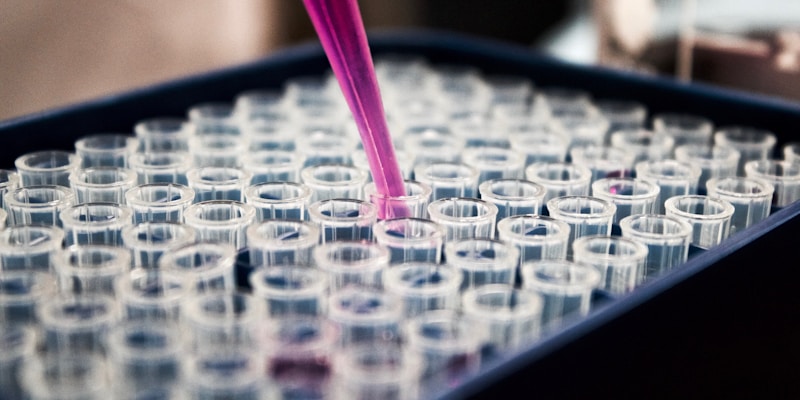
The Dual Peptide Pathway

GHK-Cu Molecular Mechanism: GHK-Cu (Gly-His-Lys·Cu²⁺) is a naturally occurring tripeptide-copper complex with a high affinity for cupric ions (Kd ~10⁻¹⁴ M). Its biological activity operates through several converging pathways. It upregulates mRNA expression of collagen type I alpha-1 (COL1A1) and collagen type III alpha-1 (COL3A1) in dermal fibroblasts, with Pickart et al. demonstrating 70% increases in collagen synthesis in vitro. GHK-Cu also activates lysyl oxidase, the copper-dependent enzyme responsible for cross-linking newly synthesized collagen and elastin chains — critical for structural tensile strength. At the genomic level, Pickart's 2012 analysis of gene expression arrays showed GHK modulates 31.2% of all genes linked to wound-healing and tissue remodeling, including upregulation of VEGF (vascular endothelial growth factor) for angiogenesis and downregulation of TGF-β1 — paradoxically reducing fibrotic (scar-forming) remodeling while promoting regenerative remodeling. Anti-inflammatory effects are mediated through NF-κB pathway suppression and reduction of pro-inflammatory cytokines IL-1β and TNF-α.

Argireline (Acetyl Hexapeptide-3) Mechanism: Argireline is a synthetic hexapeptide (Ac-Glu-Glu-Met-Gln-Arg-Arg-NH₂) that acts as a competitive inhibitor of the SNARE complex at the neuromuscular junction. The SNARE complex — comprising SNAP-25, syntaxin, and VAMP/synaptobrevin — is the molecular machinery that docks acetylcholine-containing vesicles to the presynaptic membrane for exocytotic release. Argireline's N-terminal sequence mimics the SNAP-25 binding domain, competing for the SNARE binding site and thereby reducing Ca²⁺-dependent neurotransmitter release. Blanes-Mira et al. (2002) showed a 30% reduction in neurotransmitter release in in vitro models. Clinically, this translates to softened dynamic wrinkles (expression lines) with topical concentrations of 5–10% in appropriate delivery vehicles — notably less dramatic than botulinum toxin type A, which irreversibly cleaves SNAP-25 via its zinc endopeptidase activity.

Penetration Science: Kang et al. (2009) established that effective dermal peptide delivery requires overcoming a ~500-dalton molecular weight cutoff imposed by the stratum corneum's lipid bilayer organization. Microneedling creates transient aqueous microchannels (100–400 µm depth) that bypass this barrier entirely, increasing peptide flux by up to 10,000-fold in ex vivo models. Alternative delivery strategies include lipid nanoparticle encapsulation, transfersomes (deformable liposomes), and iontophoresis. Professional mesotherapy delivery (intradermal injection of 2–4 mg/mL GHK-Cu) bypasses the barrier entirely, achieving therapeutic dermal concentrations that topical formulations rarely approach.

1
GHK-Cu enters the dermis → binds copper-dependent enzymes → activates COL1A1 and COL3A1 gene expression → fibroblasts begin producing structural collagen
2
Lysyl oxidase is activated → newly synthesized collagen chains are cross-linked → the new matrix becomes mechanically strong, not just abundant
3
GHK-Cu upregulates VEGF → new micro-capillaries form → the repair zone receives more oxygen and nutrients → inflammation is simultaneously reduced via NF-κB suppression
4
Meanwhile, Argireline at the neuromuscular junction → competes with SNAP-25 in the SNARE complex → reduces acetylcholine vesicle release → the muscle contraction that deepens expression lines is modestly reduced
5
The combined result → GHK-Cu rebuilds the collagen wall from within; Argireline slows the mechanical forces that keep cracking it — two different angles on the same problem

The house-renovation analogy holds here: GHK-Cu is the contractor rebuilding the walls, while Argireline is the shock absorber that stops the structural stress from getting worse.

Quick Check

Test Your Understanding

Three questions — from the basics to the surprising. See how much you've taken in.

What makes GHK-Cu fundamentally different from a regular moisturizer or collagen cream?

It contains more collagen molecules, so it directly replaces what your skin has lost
It signals your own fibroblasts to synthesize new collagen, promotes angiogenesis, and actively remodels the extracellular matrix — it's a biological rebuilding command, not a surface treatment
It seals the skin barrier more tightly, which slows water loss and makes skin look plumper

Well done!

You now understand more about peptide biology than most people who buy peptide products. That knowledge is the difference between spending wisely and spending on marketing.

Take Action

Your Peptide Protocol Starts Today

Tap each card to check it off. These are the specific steps that translate the science into real results.

Add a GHK-Cu serum to your PM routine after cleansing — copper peptides can interact with Vitamin C, so keep them separated by AM vs. PM
Use a derma roller (0.25–0.5 mm) or book a professional microneedling session monthly — this can increase peptide absorption by orders of magnitude
Apply an Argireline-containing product (5–10% concentration) to your forehead and crow's feet daily — this targets dynamic expression lines where Botox would otherwise go
Pair your PM GHK-Cu with a retinoid to synergistically stimulate collagen; use a Vitamin C serum AM to protect and co-stimulate collagen synthesis during daylight hours
Apply broad-spectrum SPF 50 every morning — UV radiation destroys new collagen within hours of sun exposure, erasing everything your peptides built overnight
Ask your dermatologist about professional-grade GHK-Cu mesotherapy or prescription-strength formulations — concentration and delivery method are everything

Peptide products are generally well-tolerated, but copper peptides should not be combined with strong acids (Vitamin C, AHAs) in the same application step — they can inactivate each other. If you have a history of skin conditions or are on prescription topicals, confirm this protocol with your dermatologist before starting. Microneedling carries infection risk if devices are not properly sterilized.

Your Next Step

You Now Have a Rebuilding Plan — Not Just a Skincare Routine

Most people treat their skin like a canvas to paint over. You now know it's a living structure that can be genuinely rebuilt. The biology is on your side. The question is giving it the right signals, in the right order, with the right delivery. Here's how to move forward with your physician.

1

Audit Your Current Products

Bring your current skincare products to your next appointment. Your doctor can identify what's actually working at the dermal level vs. what's just sitting on the surface — and flag any interactions.

2

Ask About Professional Delivery Options

Ask specifically about GHK-Cu mesotherapy, professional microneedling with peptide infusion, or physician-compounded topical formulations with penetration enhancers. These aren't the same as over-the-counter serums.

3

Set a 90-Day Benchmark

Collagen remodeling takes time — 8 to 12 weeks minimum for measurable changes. Take baseline photos in consistent lighting today. Progress is real but subtle; you need the comparison to see it.

Your Physician

Aesthetics & Regenerative Medicine

Did you finish the module?

Let your doctor know you've completed this protocol and send them any questions you might have about your specific situation.

This module is health education — not a personal medical diagnosis. Always work with your physician before changing your supplement regimen, especially if you are pregnant, nursing, or taking prescription medications.

References

Scientific Sources

All claims in this module are supported by peer-reviewed research.


Pickart L, Vasquez-Soltero JM, Margolina A. GHK-Cu may prevent oxidative stress in skin by regulating copper and modifying expression of numerous antioxidant genes. Cosmetics. 2015;2(3):236–247. doi:10.3390/cosmetics2030236
Pickart L, Margolina A. Regenerative and protective actions of the GHK-Cu peptide in the light of the new gene data. International Journal of Molecular Sciences. 2018;19(7):1987. doi:10.3390/ijms19071987
Blanes-Mira C, Clemente J, Jodas G, et al. A synthetic hexapeptide (Argireline) with antiwrinkle activity. International Journal of Cosmetic Science. 2002;24(5):303–310. doi:10.1046/j.1467-2494.2002.00153.x
Faa G, Gerosa C, Fanni D, et al. Copper in health and disease. Current Medicinal Chemistry. 2008;15(2):116–123. doi:10.2174/092986708783497101
Kang SM, Kim KJ, Kim HJ, et al. Peptide penetration study of the skin using confocal laser scanning microscopy and tape stripping. Skin Research and Technology. 2009;15(1):84–90. doi:10.1111/j.1600-0846.2008.00336.x
Varani J, Dame MK, Rittié L, et al. Decreased collagen production in chronologically aged skin: roles of age-dependent alteration in fibroblast function and defective mechanical stimulation. American Journal of Pathology. 2006;168(6):1861–1868. doi:10.2353/ajpath.2006.051302
Gorouhi F, Maibach HI. Role of topical peptides in preventing or treating aged skin. International Journal of Cosmetic Science. 2009;31(5):327–345. doi:10.1111/j.1468-2494.2009.00490.x

This module is health education — not a personal medical diagnosis. Always work with your physician before changing your supplement regimen, especially if you are pregnant, nursing, or taking prescription medications.

Powered by The AI Doc