Body

The "Don't Fall" Blueprint

How to bulletproof your balance, strength, and independence so you never have to fear a fall again
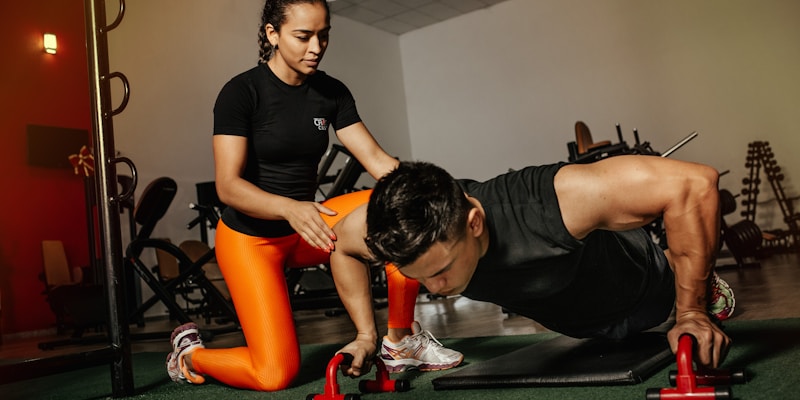
Active older adult walking confidently

Your doctor shared this because fall prevention is one of the most powerful things you can do right now to protect your health, your independence, and your quality of life.

What you'll learn:

  • Why falls are the #1 threat to your independence — and how trainable your balance actually is
  • The four body systems you need to strengthen to become fall-proof
  • Six specific daily habits you can start today to dramatically reduce your risk
Body

Your Balance is a Skill — Not a Life Sentence

Before you begin
Trouble reading? Press Cmd + (Mac) or Ctrl + (Windows) to enlarge this text. On mobile, carefully pinch-to-zoom.
Prefer to listen? Use your device's native "Spoken Content" or "Select to Speak" accessibility settings to have this module read aloud to you while you rest your eyes.

Most people assume that as they get older, falling is just something that happens. It's not. Balance, strength, and coordination are trainable — at any age. Your brain can relearn where your body is in space. Your legs can get stronger. Your risk can drop dramatically.


Think of your body like a house. If the foundation — your balance and leg strength — is crumbling, the whole structure is at risk, no matter how nice the rest looks. This module is about retrofitting that foundation with steel and concrete, so the exact disaster you're trying to avoid never happens.

Balance Training Fall Prevention Leg Strength Healthy Aging
Why It Matters

The Numbers Will Surprise You

Falls aren't a freak accident. They're the most predictable — and preventable — threat to your independence.

0
Falls Per Year in the U.S.
About 36 million older adults fall each year — that's roughly one fall every second of every day.
0
Emergency Room Visits
Over 3 million older adults are treated in emergency departments for fall injuries every year in the U.S.
0
Falls Cause Serious Injury
1 in 5 falls causes a serious injury like a broken hip or head trauma — often triggering a permanent loss of independence.
Up to 40% Reducible
Your Risk With the Right Training
Evidence-based exercise programs — especially balance and strength training — can reduce fall risk by up to 40%. This is not a minor effect. It's life-changing.

Sources: CDC Injury Center, Falls Prevention Facts, 2023; Sherrington C, et al. Cochrane Database Syst Rev. 2019.

Key Concepts

Four Things You Need to Understand

Tap each card to flip it and learn exactly what's going on inside your body when it comes to balance and falling.

Proprioception
Your body's "GPS system." Tiny sensors in your muscles, joints, and feet constantly send signals to your brain telling it exactly where every part of you is in space. When this system gets rusty with age, your brain hesitates — and that fraction of a second is when you fall.
Ankle Stability
Your ankles are the first line of defense when you trip or step on an uneven surface. Strong, flexible ankles absorb and correct small wobbles before they become falls. Weak ankles are like worn-out shock absorbers — every tiny bump rattles the whole car.
Sit-to-Stand Strength
The ability to stand up from a chair without pushing off with your hands is one of the strongest predictors of how independent you'll be in 10 years. It tests your quads, glutes, and core all at once. It's the single best daily metric of your functional fitness.
Core Engagement
Your core isn't just your abs — it's the entire cylinder of muscles wrapping your torso, including your back and pelvis. When your center of gravity shifts (like when you reach for something or step off a curb), your core fires automatically to keep you upright. A weak core means a slow, inadequate response — and a fall.

↑ Tap any card to flip it

How It Works

The Strength-Independence Spectrum

Lower body strength and balance exist on a spectrum. Slide to see how your current fitness level maps to your real-world independence — and what the research says about where you want to be.

Your Lower Body Strength & Balance Level
Severely Weak Moderate Strong & Stable
Common Myths

Three Things Most People Get Wrong

Tap each card to flip from the myth to the truth. These misconceptions are the exact reason so many people don't take action until after a fall.

"Falls just happen when you're old. There's nothing you can really do about it."
Balance and strength are trainable skills at any age. Studies show targeted exercise programs reduce fall risk by up to 40%. Your nervous system can literally rewire itself to improve balance — this is called neuroplasticity, and it doesn't stop at 65 or 75 or 85.
"I should avoid exercise and move less so I don't risk falling."
Avoiding movement is the single fastest way to guarantee a fall. Inactivity leads to muscle loss (sarcopenia), stiff joints, and a brain that loses its feel for where the body is. Regular, structured movement — especially balance and strength work — is the best fall prevention medicine that exists.
"If I need to grab a wall or sink for balance during exercises, I'm cheating and it doesn't count."
Using support is smart, not cheating. Practicing balance near a stable surface lets you safely challenge your limits without the danger of an actual fall. Over time, you'll need less and less support. The goal is progressive challenge — not reckless risk.

↑ Tap each card to reveal the truth

The Science

Why Your Body Falls — And How to Stop It

A fall isn't random. It's the end result of a chain of small failures. Here's exactly what happens — and where you can intervene.
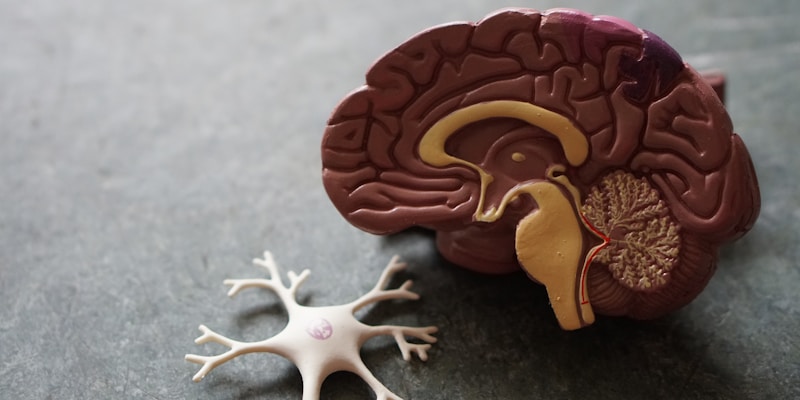
Neuroscience of balance

The Fall Chain — and Where You Break It

Postural control is mediated by three overlapping sensory systems: the vestibular system (inner ear sensing head acceleration and gravity), the visual system, and the somatosensory system (mechanoreceptors in skin, muscle spindles, Golgi tendon organs, and joint capsule receptors). The cerebellum integrates these inputs in real time, issuing continuous corrective motor commands via the corticospinal and reticulospinal tracts. With aging, there is a measurable decline in all three sensory channels — peripheral vestibular hair cell density decreases, visual acuity and contrast sensitivity fall, and peripheral nerve conduction velocity slows by approximately 1–2 m/s per decade. The result is a degraded "sensory conflict resolution" capacity: when environmental cues are ambiguous (dim lighting, uneven terrain), the aging nervous system is slower to arbitrate between conflicting inputs and produce a corrective response.

Sarcopenia — age-related skeletal muscle loss — compounds this by reducing the speed and force of the muscular response once the brain has identified a perturbation. Type II (fast-twitch) muscle fibers are preferentially lost, precisely the fibers needed for rapid reactive stepping. The sit-to-stand test operationalizes this: it requires rapid eccentric-to-concentric loading of the quadriceps, gluteus maximus, and hip extensors through a range of motion where older adults are typically weakest. Research using surface electromyography shows that adults who cannot complete five sit-to-stands in under 12 seconds demonstrate significantly delayed tibialis anterior activation latencies during balance perturbation, directly correlating with prospective fall risk.

Targeted interventions work at multiple nodes simultaneously. Progressive resistance training increases motor unit recruitment and preferentially hypertrophies type II fibers. Balance training (Tai Chi, single-leg standing, perturbation training) enhances cerebellar adaptation and improves sensory reweighting — the brain's ability to upregulate reliable inputs (e.g., somatosensory) when others degrade. A 2019 Cochrane meta-analysis (Sherrington et al.) covering 108 trials and over 23,000 participants found that exercise programs combining balance challenge with strengthening produced a 23% reduction in fall rate and a 15% reduction in fall-related fractures. The dose-response relationship is clear: programs delivering more than 50 hours of cumulative exercise show the greatest effect sizes.

1
A perturbation occurs — you catch a rug edge, step off an unexpected curb, or reach overhead. Your body's center of mass shifts outside your base of support.
2
Proprioceptors fire — sensors in your ankles, knees, and hips detect the shift and send an emergency signal to your brain. In a trained body, this signal is fast and clean. In a deconditioned one, it's slow and distorted.
3
The brain decides — the cerebellum processes the incoming data and issues a correction command. This takes milliseconds. The fresher your balance training, the faster and more accurate this command is.
4
Muscles must respond — your core, glutes, quads, and ankle muscles have to fire fast enough to catch you. Weak, slow muscles miss the window. Strong, trained muscles don't.
5
Recovery or fall — a trained body executes a rapid corrective step or weight shift and recovers smoothly. An untrained body can't generate enough force in time — and falls. Every strength and balance session you do makes step 4 faster and more powerful.

The good news: every single step in this chain is improvable with training. You are literally rebuilding the neural pathway that catches you before you hit the ground.

Quick Check

Test Your Understanding

Three quick questions. You already know the answers — this just makes them stick.

What is the leading cause of loss of independence in older adults?

Heart disease and its complications
Falls and the injuries they cause, such as hip fractures
Cognitive decline and dementia

Well done!

You now understand the core science of fall prevention better than most people half your age. The difference between someone who falls and someone who doesn't isn't luck — it's preparation. You're building yours right now.

Take Action

Six Things You Can Do Starting Today

Tap each card to check it off. These aren't vague suggestions — they're the specific daily habits backed by evidence. Start with whichever one feels most doable right now.

Stand on one leg for 30 seconds each morning while brushing your teeth — hold the sink if needed. Switch legs.
Do 10 sit-to-stands from a sturdy chair every day — no hands. Go slow and controlled, especially on the way down.
Walk heel-to-toe in a straight line down a hallway for 3 minutes to sharpen your proprioception and ankle control.
Walk your home and eliminate trip hazards: secure loose rugs, tuck away cords, add night-lights to hallways and bathrooms.
Wear supportive, well-fitting shoes with non-slip soles indoors — not just outside. Socks on hardwood floors are a fall waiting to happen.
Ask your doctor or physical therapist to assess your fall risk and design a resistance program for your calves, quads, and glutes.

These recommendations are evidence-based general wellness strategies for fall prevention. They are not a substitute for a personalized assessment by your physician or physical therapist. If you have had a recent fall, balance disorder, osteoporosis, or are taking medications that affect balance (such as blood pressure medications or sedatives), please speak with your doctor before beginning any new exercise program.

Your Next Step

Reclaim Your Confidence — Starting This Week

Fear of falling can shrink your world faster than a fall itself. People stop going out, stop exercising, stop visiting friends — and that inactivity makes the next fall even more likely. This module is the turning point. Here's what to do next.

1

Start the "Toothbrush Balance" habit today

Tomorrow morning, stand on one leg while you brush. Hold the sink. Thirty seconds per side. That's your new baseline. It costs zero extra time and starts retraining your nervous system immediately.

2

Do a 15-minute home safety walk this week

Go room to room with fresh eyes. Loose rugs? Secure them or remove them. Dark hallways? Add a plug-in nightlight. Cords crossing walkways? Reroute them. Most dangerous home features cost under $10 to fix.

3

Bring this module to your next appointment

Ask your doctor to formally assess your fall risk and refer you to a physical therapist for a personalized strength and balance program. A PT can identify your specific weak links and build a program around them in ways no general guide can.

Your Doctor

Primary Care / Geriatrics / Sports Medicine

Did you finish the module?

Let your doctor know you've completed this module and send them any questions you have about your specific fall risk or exercise plan.

This module is health education — not a personal medical diagnosis. Always work with your physician before beginning a new exercise program, especially if you have a history of falls, cardiovascular disease, osteoporosis, or are taking medications that may affect balance.

References

Scientific Sources

All claims in this module are supported by peer-reviewed research and authoritative clinical guidelines.


Centers for Disease Control and Prevention (CDC). Falls Prevention Facts. National Center for Injury Prevention and Control, 2023. Available at: cdc.gov/falls/data
Sherrington C, Fairhall NJ, Wallbank GK, et al. Exercise for preventing falls in older people living in the community. Cochrane Database of Systematic Reviews. 2019;(1):CD012424. doi:10.1002/14651858.CD012424.pub2
Panel on Prevention of Falls in Older Persons, American Geriatrics Society and British Geriatrics Society. Summary of the Updated American Geriatrics Society/British Geriatrics Society Clinical Practice Guideline for Prevention of Falls in Older Persons. Journal of the American Geriatrics Society. 2011;59(1):148–157. doi:10.1111/j.1532-5415.2010.03234.x
Granacher U, Muehlbauer T, Gruber M. A qualitative review of balance and strength performance in healthy older adults: impact for testing and training. Journal of Aging Research. 2012;2012:708905. doi:10.1155/2012/708905
Bohannon RW. Sit-to-stand test for measuring performance of lower extremity muscles. Perceptual and Motor Skills. 1995;80(1):163–166. doi:10.2466/pms.1995.80.1.163
Shumway-Cook A, Brauer S, Woollacott M. Predicting the probability for falls in community-dwelling older adults using the Timed Up & Go Test. Physical Therapy. 2000;80(9):896–903. doi:10.1093/ptj/80.9.896

This module is health education — not a personal medical diagnosis. Always work with your physician before changing your exercise program, especially if you are pregnant, nursing, or taking prescription medications that may affect balance or bone density.

Powered by The AI Doc