The five psychological habits that research shows protect your cognitive health as you age — the ones most doctors never talk about

Your doctor shared this because protecting your cognitive health requires more than physical habits — the psychological side of aging is just as important, and just as actionable.
Cmd + (Mac) or Ctrl + (Windows) to enlarge this text. On mobile, carefully pinch-to-zoom.You already know you should exercise, sleep well, and eat right. Those protect your brain — the biological hardware. But research is revealing something we've largely ignored: aging is also a psychological process, and the mind needs its own kind of protection.
Think of it this way: exercise and diet maintain the engine of your car. But without a destination and a reason to drive, even the best-maintained car just sits in the garage with the engine slowly winding down. That's what happens when we neglect purpose, connection, and curiosity as we age.
The research on psychological aging isn't soft or speculative. These numbers are striking — and they point directly at things you can change.
Sources: Husain M. "Our Brains, Our Selves." Newsweek, 2026; Harvard Study of Adult Development (Waldinger & Schulz); Donovan NJ et al. JAMA Psychiatry 2020.
These are the core building blocks of psychological aging. Tap each card to flip it and reveal what it actually means for you.
↑ Tap any card to flip it
Each of these factors independently supports cognitive health as you age. Tap each one to see exactly how it works — and why it matters for your brain.
↑ Tap each to expand
These are the three most common misconceptions — and they're keeping people from protecting themselves. Tap each card to reveal the truth.
↑ Tap each card to reveal the truth
This is the biological chain reaction that happens when psychological neglect goes unchecked — and why catching it early matters so much.
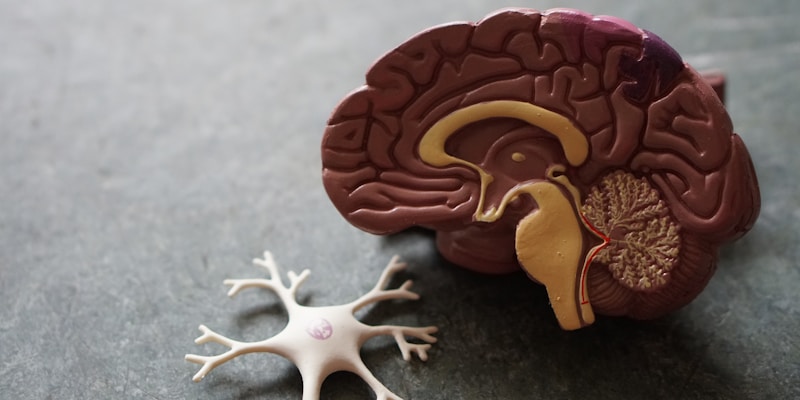
Apathy in aging is neurobiologically distinct from depression and is characterized by a profound reduction in goal-directed behavior, motivation, and emotional reactivity. Neuroimaging studies consistently demonstrate that apathy correlates with hypometabolism (reduced glucose utilization) in the anterior cingulate cortex (ACC) and orbitofrontal cortex (OFC) — regions critical for motivational salience, reward-based decision making, and the integration of emotional valence with behavioral output. The ACC, in particular, serves as a hub connecting prefrontal executive networks with limbic structures including the amygdala and hippocampus. When ACC activity is chronically suppressed, downstream dopaminergic signaling from the ventral tegmental area (VTA) is attenuated, reducing the motivational drive that is essential for cognitive engagement and memory consolidation.
The longitudinal association between apathy and dementia risk appears to be mediated by multiple convergent pathways. First, reduced cognitive engagement accelerates the loss of cognitive reserve — the brain's functional redundancy that allows it to compensate for early neurodegenerative changes. Second, apathy is associated with elevated inflammatory markers including IL-6 and TNF-α, which directly promote amyloid-beta aggregation and tau phosphorylation — the hallmark pathologies of Alzheimer's disease. Third, apathetic individuals show significantly higher rates of physical inactivity, poor sleep hygiene, and social withdrawal, each of which independently increases Alzheimer's risk. The 2020 Donovan et al. study in JAMA Psychiatry, drawing on data from the Harvard Aging Brain Study, demonstrated that elevated apathy scores at baseline predicted a doubling of dementia incidence over a 10-year follow-up, even after controlling for depression, baseline cognitive performance, and cardiovascular risk factors.
Critically, purpose — the psychological antidote to apathy — engages the same prefrontal-limbic circuits through a different mechanism. McAdams's construct of "narrative identity" and Steger's measure of "presence of meaning" both show robust negative correlations with amyloid burden on PET imaging, suggesting that meaning-making may exert direct neuroprotective effects beyond behavioral mechanisms. Relationship quality operates through the HPA axis: warm social bonds suppress cortisol reactivity and reduce allostatic load, decreasing glucocorticoid-mediated hippocampal volume loss — one of the earliest structural changes in Alzheimer's pathology. The intersection of psychological resilience and neurobiology is no longer speculative; it is among the most active and productive frontiers in cognitive aging research.
Every one of the five psychological protectors in this module interrupts this cascade at a different point. That's why they work together — and why starting now matters, regardless of your age.
Three questions. No pressure — this is just to help the ideas stick. You've got this.
According to research on psychological aging, people who develop apathy face what increased risk?
The 80-year Harvard Study of Adult Development found the strongest single predictor of mental and physical health in old age to be:
What is the most accurate description of "psychological flexibility"?
You now understand the psychological science of aging better than most people — including most patients. The next step is turning this knowledge into daily habits. Let's build your action plan.
Each card below maps directly to one of the five psychological protectors. Tap each one you're committing to — even one is a real start.
These strategies are evidence-informed lifestyle interventions for healthy aging and are not a substitute for clinical evaluation or treatment. If you're experiencing significant apathy, persistent low mood, or noticeable memory changes, please speak with your physician promptly — these can have treatable medical causes.
You've just learned the psychological side of aging that most conversations about brain health miss entirely. The science is clear: purpose, connection, flexibility, story, and curiosity are not soft lifestyle add-ons. They are robust, measurable protectors of your cognitive future. The engine matters — but so does having somewhere meaningful to go.
Go back to the Action Cards and pick the one that resonates most. Schedule it into your calendar today — a specific time, a specific person, a specific commitment.
Share what surprised you most from this module with a friend, family member, or your doctor. Talking about psychological health out loud makes it real — and starts the kind of meaningful conversation that is itself protective.
Ask your doctor whether psychological resilience factors — purpose, social health, adaptability — should be part of your regular wellness assessment. The best physicians want to know about the whole person, not just the numbers.
Let your doctor know you've completed this and send them any questions you have about your specific situation.
This module is health education — not a personal medical diagnosis. Always work with your physician before changing medications or supplements, and seek prompt evaluation for any significant or new cognitive symptoms.
All claims in this module are supported by peer-reviewed research or landmark longitudinal studies.
This module is health education — not a personal medical diagnosis. Always work with your physician before making significant changes to your health regimen, especially if you are managing a diagnosed medical condition.